When everything falls apart: it is not the end, but a new beginning
When Alexander's own ideas about his ministry fell apart, the Lord Jesus opened up a new season for him, filled with grace.

When Alexander Barkóci believed everything was over, his wife reminded him: your ideas have fallen apart, not God's work.
In this article
When everything falls apart: it is not the end
Alexander Barkóci once came home in tears. He had been through a difficult season in his preaching ministry, and he did not understand why things had ended the way they did. What he had devoted his youth, his life, and all his strength to, he suddenly saw as ruins.
He told his wife Zuzka:
"It's the end, Mom. Everything is over."
Zuzka saw his pain, but she answered him with a different perspective:
"It's not the end, Dad. It's a new beginning."
Alexander objected that all his ideas had fallen apart. Her answer went to the heart of what had happened: his ideas had fallen apart, but God has His own.

When what you gave your strength to comes to an end
Alexander was not talking about a small change of plans. He was describing a moment when he felt that everything he had invested his youth and his life in had been made worthless. He felt wounded, rejected, and humiliated. He even wondered whether God had turned away from him too.
So his story does not begin with easy encouragement. It begins with tears and the question of whether he had done everything wrong. Alexander prayed that the Lord would give him light and show him what to do. At a conference he would not normally have attended, he received personal encouragement that God had another calling for him.
When he then found himself alone with his wife and family, they began to see how the Lord God was opening up new things. Only in hindsight could he say of that painful moment: it was not the end of God's work, but the end of one season.
My ideas fell apart, not God's work
Sometimes the hardest part is not only what we have lost. It also hurts when our idea of how our life was supposed to go falls apart. A person can sincerely believe that his plan is also God's plan. Alexander admits that even in his sincerity he may have made mistakes and that he had pictured God's work differently.
In the second teaching he returns to the words of the prophet Isaiah, which say that God's thoughts are not our thoughts and His ways are not our ways (Isaiah 55:8–9). This truth did not lead him to indifference, but to humility. He came before the Lord with a simple prayer:
"Lord, here I am to do Your holy will."
So the new beginning did not mean that Alexander quickly came up with a backup plan. It meant that he laid his own ideas down before the Lord and let Him lead the next step.

The potter can start over with the vessel
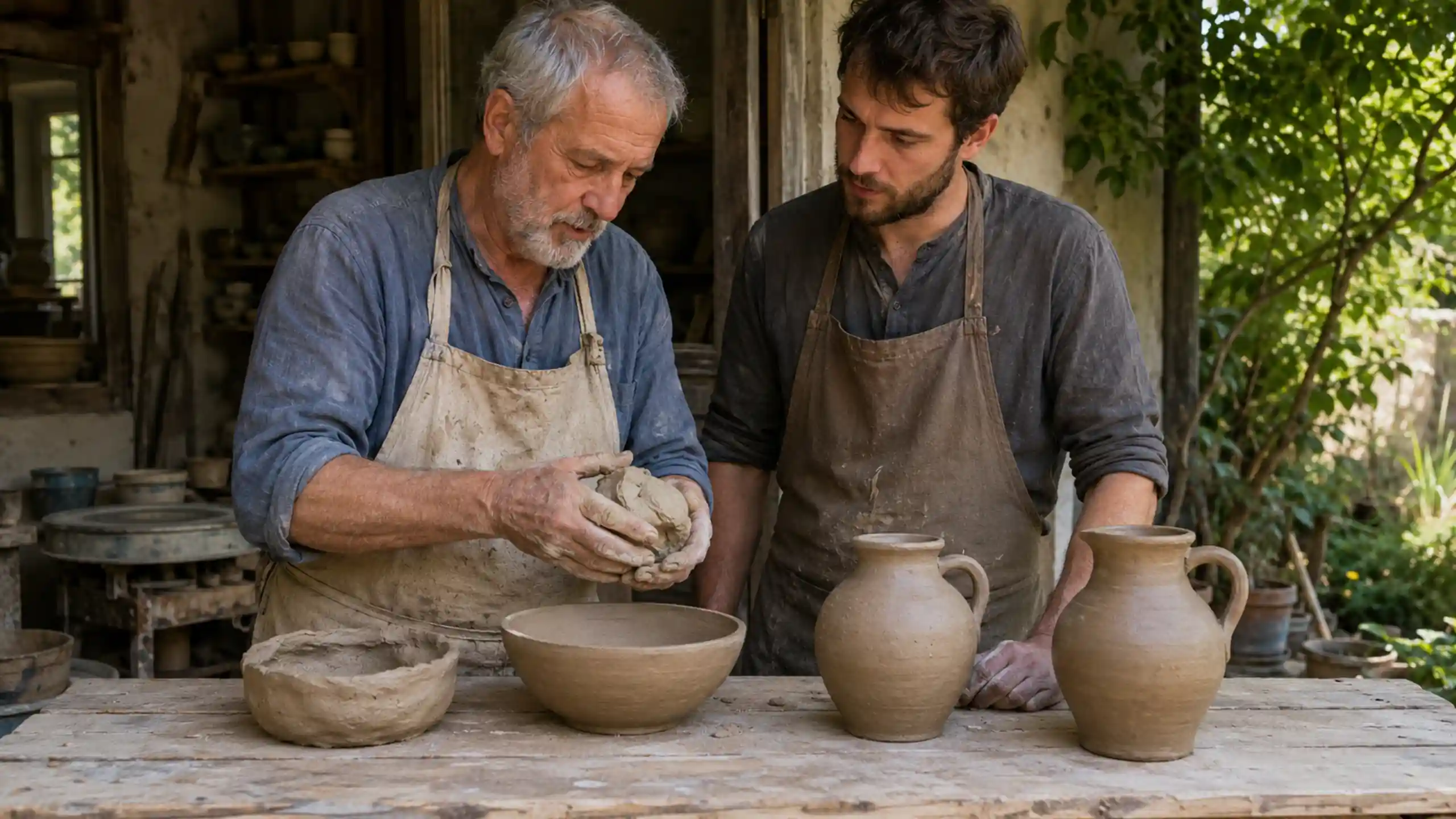
Alexander explains this season with the picture of the potter in Jeremiah 18. The prophet saw a vessel that was marred in the potter's hands. The potter did not throw the clay away. He started over and made it into another vessel according to his purpose (Jeremiah 18:3–6).
Clay on a spinning wheel does not know which way is north. In the same way, after a sudden blow a person may not be able to find his bearings. Alexander says that this is exactly where he learned to trust God even when he did not understand what was happening in his life.
The picture of the potter does not mean that the pain is not real. Alexander came home in tears. But he says that God's work does not have to end the moment a person loses his own bearings. The potter still holds the clay in his hands, and he knows what he wants to make of it.
God's work does not end with one person or one season
In time, Alexander realized something else as well: God's work does not rest on him alone. The Lord God calls other men and women who enter ministry and carry it on. The end of Alexander's role in one place did not mean the end of what God was doing.
Later Alexander says that a person needs to separate his own ego from ministry. He did not find his new beginning by holding on to his old place at any cost. He found it in trusting that the Lord Jesus could lead his life down a different path.
When he later described this season, he said that afterward he experienced more of the grace of the Lord Jesus than ever before. Yet the road was not without further blows or thorns. The new beginning did not mean a life without pain. It meant going on with the Lord Jesus.
A separate article looks at broader biblical encouragement on how to stay in the faith during a hard season. Alexander's testimony on this page focuses on one specific moment, when one season of his ministry came to an end.

The Lord Jesus came back even to His disappointed disciples
Alexander also reminds us of the disciples. They had their own ideas about what Christ's kingdom would look like. When the Lord Jesus was crucified, their ideas fell apart. Peter said he was going fishing, and the others went with him.
That is exactly where the Lord Jesus sought them out and spoke to them again (John 21:1–19). Alexander sees Christ's patience in this. When disappointment brought the disciples back to the place they had once come from, the Lord did not stop seeking them.
Sometimes, after our plans collapse, all a person can do is go back to what he knew. But the Lord Jesus can come even there. He does not come to confirm every idea we have. He comes to turn our attention back to Himself.
"Behold, I make all things new"
Alexander connects his testimony with the words of the Lord Jesus:
"Behold, I make all things new." (Revelation 21:5)
Not every loss turns right away into visible success. Alexander himself had to go through pain, prayer, uncertainty, and humbling. But his testimony says that the end of one season does not have to be the end of God's work in a person.
If your job, ministry, relationship, or the future you had pictured has fallen apart, you do not have to pretend it does not hurt. But you can bring your pain and your broken ideas to the Lord Jesus. He remains the Lord who sees you, holds you, and can open a path before you that you do not yet know.
Maybe today you cannot see a new beginning. Alexander could not see it either when he came home in tears. But he did the most important thing: he turned to the Lord Jesus and told Him that he was ready to do His will.

Short prayer for a new beginning
Dear Lord Jesus,
I bring You what has fallen apart in my life, and the ideas I have held on to. You see my pain, and You know what I do not understand today.
Forgive me for the times I took my own will to be Yours. Cleanse my heart and teach me to trust You even when I do not know where the next step leads.
Lord, here I am. I want to do Your holy will. Hold me in Your hands and do in my life what pleases You.
Thank You that You do not leave me, and that in You the end of one season does not have to be the end of hope.
Amen.
Do you have your own question about a new beginning with God?
The Bible Guide searches Alexander Barkóci's public sermons and teachings and shows you where he speaks about this topic – with Bible verses and the exact time in the video.
Bible passages used in this article
Jeremiah 18:3–6 – the potter starts over with the vessel and shapes it according to his purpose.
Isaiah 55:8–9 – God's thoughts and ways go beyond human ideas.
John 21:1–19 – the Lord Jesus comes again to Peter and the disciples while they are fishing.
Revelation 21:5 – "Behold, I make all things new."
All four biblical threads are used directly in Alexander Barkóci's core teachings or in his immediate explanation of them.
Sources used and exact timestamps
1. Main source – Alexander's testimony and the picture of the potter
Teaching: 1893. Nedeľa s hosťom (Sunday with a guest) – Alexander Barkóci, Nové Mesto nad Váhom (Slovakia), April 14, 2024
Video: YouTube (The video is in Slovak – turn on subtitles in English.)
Key segments:
01:01:32–01:05:54– Jeremiah 18 and the vessel the potter started over with;01:07:55–01:12:34– clay on the wheel, a blow, and losing one's bearings;01:11:01–01:15:50– coming home in tears, Zuzka's words, and the new beginning;01:12:47–01:17:47– God does not end His work, trust without understanding, and humility.01:21:20–01:25:53– separating one's own ego from ministry, and faithfulness to the Lord Jesus.
Main points used: Alexander saw his work as ruins; Zuzka turned him toward a new beginning; God continues His work; in the midst of the blow, Alexander learns to trust.
2. Second main source – the end of a season and ideas that fell apart
Teaching: 2196. Naše vlastné predstavy sú prekážkou Božieho kráľovstva (Our own ideas are an obstacle to the kingdom of God) – Alexander Barkóci, Senec, April 15, 2026
Video: YouTube (The video is in Slovak – turn on subtitles in English.)
Key segments:
00:17:02–00:25:54– the end of his preaching ministry, searching for an answer, and new things opening up;00:24:27–00:28:49– "it is not the end," Revelation 21:5, Zuzka's answer, and a prayer of surrender;00:27:25–00:30:43– the road ahead was not without pain; the problem of our own ideas;00:58:30–01:03:14– the disciples' ideas falling apart and the Lord Jesus coming back to them;01:18:35–01:22:59– Isaiah 55, God's ideas and human ideas, closing prayer.
Main points used: Alexander received an answer during a season of hurt; God opened new things; human ideas fell apart, not God's power; the Lord Jesus spoke again to His disappointed disciples.
Limits of the sources
This article does not name the specific church, the people involved, or the full reason why Alexander's ministry at that time came to an end, because he does not state them precisely in the key passages himself. It does not judge who was right in the conflict. It records Alexander's public recollection, his admission of his own mistakes, and the spiritual meaning he later saw in these events. Photos are for illustration only. The people in them are not Alexander Barkóci, and the photos do not show real events from his life.