Lamb of God meaning: the Lord Jesus takes away the sin of the world
Why does the Bible call Jesus the Lamb of God? In this part of a sermon, Alexander recalls the words of John the Baptist and applies them directly to anyone who carries guilt: the Lord Jesus is the Lamb of God, who takes away the sin of the world. Listen to how he connects this truth with Christ's forgiveness and new life. The video is in Slovak – turn on subtitles in English.

Learn what it means that the Lamb of God takes away the sin of the world, why He died for us, and how to receive His forgiveness and new life.
In this article
The Lamb of God: the Lord Jesus Christ takes away the sin of the world
When John the Baptist saw the Lord Jesus coming, he said, “Behold the Lamb of God, which taketh away the sin of the world.” These words are among the best-known lines in the gospel. A person can hear them in church, read them in the Bible, or sing them in a song, and still not understand why the Lord Jesus is called the Lamb.
The Bible is not speaking about weakness or helplessness here. It points to the Son of God, who willingly gave His life for sinners. The Lord Jesus Christ did not come only to name human sin. He came to do what people could not do for themselves: bear their guilt, pay the price, and open up for them the way to forgiveness and reconciliation with God.
The Lamb of God is the Lord Jesus Christ, who was without sin and willingly laid down His life for us. When the Bible says that He takes away the sin of the world, it is not talking about cheaply overlooking evil. It is talking about a perfect sacrifice that God prepared for everyone and that each person receives personally through faith, repentance, and following the Lord Jesus.
This article is an editorial arrangement of five teachings by Alexander Barkóci. The biblical background helps explain his emphasis on Calvary, the blood of Christ, forgiveness, and new life. The text does not attribute to Alexander any statements he did not make in the sources listed.
Lamb of God meaning: why does the Bible call the Lord Jesus the Lamb?
The picture of a lamb appears in the Bible long before the birth of the Lord Jesus. At the first Passover, Israelite families killed a lamb without blemish, and its blood was a sign of deliverance. The yearly commemoration reminded them that deliverance did not come by human strength, but by God's intervention.
Later, the prophet Isaiah spoke about God's servant, who would bear our iniquities. He was led as a lamb to the slaughter, and despite His suffering He did not open His mouth to defend Himself. So when John the Baptist called the Lord Jesus the Lamb of God, he pointed to the One in whom the old pictures were fulfilled.
People brought the sacrificial lamb, but God gave this Lamb. He is not one of many ways by which people try to draw near to God. He is God's answer to the sin of the world.
What does it mean that Jesus takes away the sin of the world?
The verb takes away points to a burden, one that the Lord Jesus takes upon Himself and carries away. Sin is not just an unpleasant feeling or a list of minor shortcomings. It brings real guilt, damages a person's relationship with God, and leaves consequences in their heart, decisions, and relationships.
Alexander Barkóci, in a sermon in Báčsky Petrovec, connects the words about the Lamb of God with Christ's forgiveness. The Lord Jesus did not come to break and destroy the people who had sinned against Him. On the cross He carried their sin and opened the way of grace. Alexander applies this truth directly to the listener: your sin, too, can be taken away; you do not have to keep dragging it around, hiding it, or using it to justify hopelessness.
But the words “the sin of the world” do not mean that every person automatically lives reconciled to God regardless of their attitude toward Christ. The sacrifice of the Lord Jesus is not a narrow offer only for a select group. It is proclaimed to the world. Yet each person is called to come to Him, admit the truth, not put off repentance, and believe the gospel.

A real price was paid at Calvary
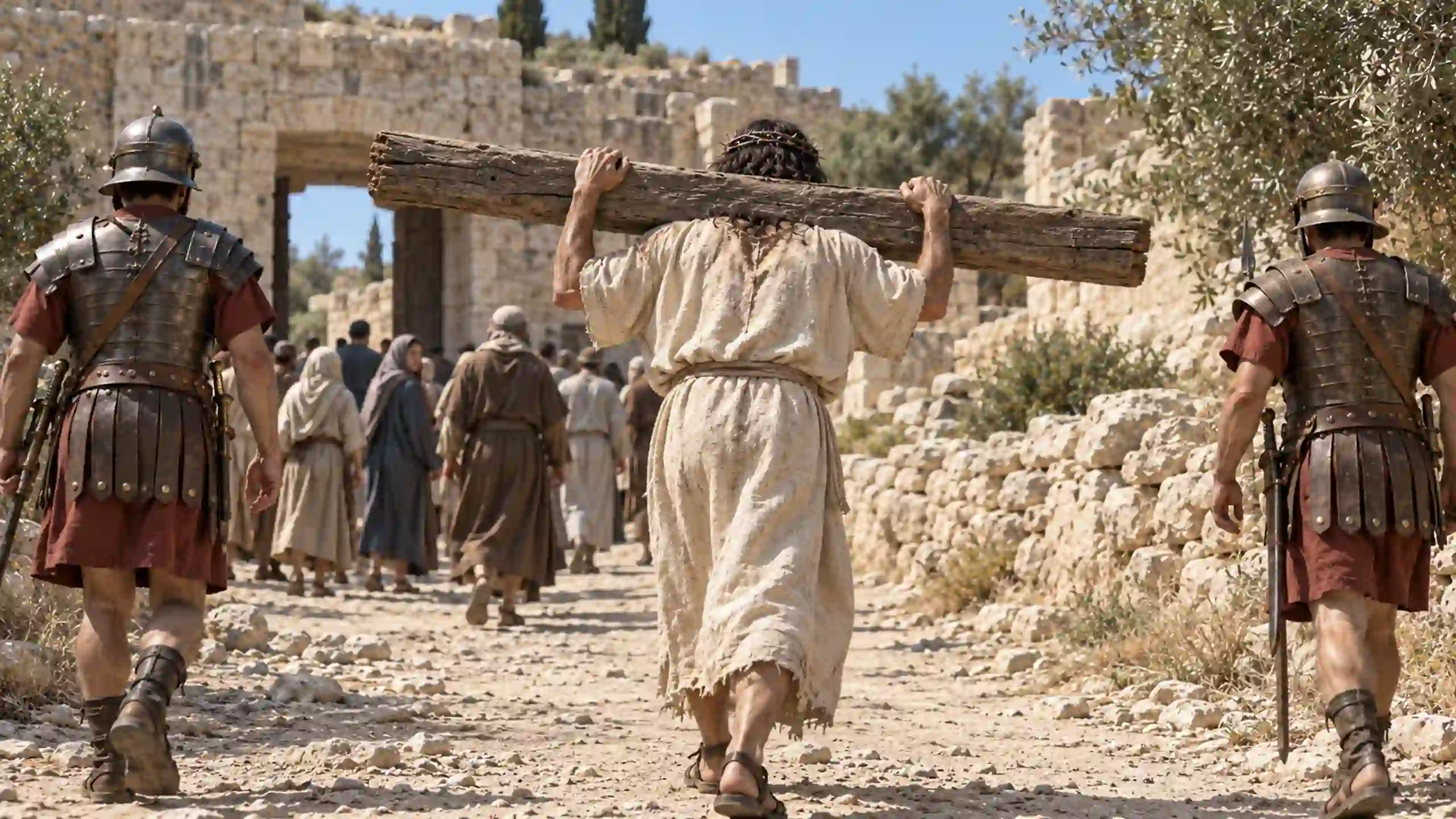
In the teaching V rukách hrnčiara (In the potter's hands), Alexander leads the listener to the foot of the cross at Calvary. There a person sees more than the tragic death of a good man. They see that someone paid for their sins. Not with gold or silver, but with His own life and precious blood.
This is how the picture of the Lamb connects with redemption. The Lord Jesus did not redeem us as if God could simply overlook evil. Sin was so serious that the innocent Son of God bore its price. At the same time, God's love is so great that the Lord Jesus paid this price for us. The article “What does it mean to be redeemed by the blood of the Lord Jesus Christ?” explains this side of the gospel in more detail.
So Calvary reveals two truths at once. It does not allow us to make light of sin, but neither does it let us think that there is no grace for us. Whoever looks only at their own guilt can fall into despair. Whoever looks only at themselves and their own decency can remain in pride. Looking at the Lamb leads to humility, gratitude, and trust.
The Lamb was silent, but His silence was not defeat
In the sermon Smrť Kristova pôsobí v nás (The death of Christ works in us), Alexander reminds us that the Lord Jesus was stripped, flogged, crowned with thorns, and spat on. But He did not answer sin with sin. He fulfilled the picture of the silent Lamb from Isaiah's prophecy.
His silence did not mean that evil is acceptable. Nor was it a sign of helplessness. The Lord Jesus knew why He was going to the cross, and He willingly remained obedient to the Father. He could have defended Himself, but He gave Himself for us.
This does not mean that a person should hide violence, refuse help that would keep them safe, or keep silent in the face of injustice. Christ's example teaches us something else: not to repay evil with evil, not to nurture hatred, and not to let another person's sin begin to rule in us as well.

The blood of Christ is not a magic formula
It is possible to speak about the blood of the Lord Jesus using biblical words and still miss its meaning. The blood of the Lamb is not a talisman, a password for controlling God, or an automatic promise of a life without accidents, illness, and trials. It stands for Christ's life given on the cross, the price of redemption, and the new covenant that God made in His blood.
Alexander stresses that no one gains this covenant through religious merit. No church performance, money, or outward ritual can redeem a person. Only the Lord Jesus Christ can give assurance of salvation.
This protects you from two mistakes. The first is relying on yourself. The second is using spiritual words without a surrendered heart. The Lamb does not call us to an empty formula, but to a personal relationship with the Lord Jesus Christ.
Forgiveness is not permission to stay in sin
If the Lord Jesus takes away sin, why then talk about repentance and change? Because forgiveness does not mean that God calls evil good. It means that He forgives the repentant person, cleanses them, and leads them out of their old way of life.
In a sermon about a pure heart, Alexander says that the Holy Spirit does not point out a specific sin in order to condemn a person without hope. The Lord Jesus is their advocate. When a person stops defending sin and confesses it, they can receive the forgiveness Christ paid for on the cross. The article “What does it mean to have a pure heart?” says more about this transformation.
At Passover, Israel removed the leaven. Alexander uses this picture to raise the question of our inner condition: it is easier to carry out an outward form than to let God expose pride, false thinking, and insincerity of heart. Our cleansing is not payment for Christ's sacrifice. It is the response of a person who has received grace and no longer wants to hold on to what the Lamb came to set them free from.

How should we respond to the Lamb of God?
First, stop hiding. Tell the Lord Jesus the truth about the sin you are aware of. Don't excuse it by what others have done, and don't compare yourself with people who, in your opinion, live worse lives.
Then lean on what He has done, not on what you can still manage to do. Ask for forgiveness and believe that Christ's sacrifice is enough. If you have hurt someone, take a concrete step to make it right. If something keeps leading you into sin, stop keeping the door open to it. If you need help, seek out a mature believer and a healthy fellowship.
Finally, follow the Lord Jesus. After speaking about redemption, Alexander does not lead people only to a feeling of relief. He speaks about walking in Christ's footsteps. Forgiveness should reach into real life: your speech, work, money, family, and conflicts, and even the decisions no one sees.
The Lamb who was slain is also alive and worthy to be followed. The book of Revelation presents Him as the One to whom honor and praise belong. Alexander says that He is worthy of our love, our service, and our faithfulness to the very end. So the gospel does not end with the question, “What can the Lord Jesus do for me?” It leads to the declaration, “Lord Jesus, I want to belong to You.”
The Lamb of God gives hope to the guilty
The words of John the Baptist are an invitation to turn our eyes away from ourselves to the Lord Jesus: “Behold the Lamb of God.” They do not say that sin is small. They say that God's answer is greater.
You do not have to pretend to be innocent or carry the guilt you confess to the Lord Jesus for the rest of your life. You can come to the foot of the cross, receive forgiveness, and begin a new life. And when you realize what price the Lamb paid, your response will not be indifference. It will be gratitude, love for God, who is good, holy, and full of love, and a decision to follow the Lord Jesus.
Closing prayer
Lord Jesus Christ,
thank You that You are the Lamb of God, who came to bear the sin of the world. Thank You that You willingly gave Yourself for me and paid the price that I could not pay.
I come to You without excuses. You know my thoughts, words, and deeds, and even the things I have tried to hide. Please show me the truth about my heart, and give me the humility not to defend anything before You.
I confess my sin to You and ask You for forgiveness. Cleanse me with Your precious blood. I do not want to use Your name as an empty formula or rely on my own merits. I believe that You died for me and rose from the dead.
Take from me the guilt I have handed over to You, and teach me to live as someone who belongs to You. Give me the strength to leave sin behind, to make right what can be made right, to forgive others, and not to repay evil with evil.
Be my Lord, Savior, and King. Teach me to walk in Your footsteps, to love You, to serve You, and to remain faithful to You to the end.
Lamb of God, Lord Jesus Christ, thank You for Your sacrifice, Your forgiveness, and new life.
Amen.
Do you have your own question about the Lamb of God?
The Bible Guide searches Alexander Barkóci's public sermons and teachings and shows you where he speaks about this topic – with Bible verses and the exact time in the video.
If you want to continue giving thanks, the “Prayer of thanksgiving for redemption by the blood of the Lord Jesus Christ” can help you.
Bible verses
John 1:29 – John the Baptist points to the Lord Jesus and calls Him the Lamb of God, who takes away the sin of the world.
Exodus 12:1–14 – at the first Passover, the blood of the Passover lamb was a sign of deliverance.
Isaiah 53:4–7 – God's servant bears our iniquities and is led as a lamb to the slaughter.
1 Corinthians 5:7–8 – the apostle Paul calls Christ our Passover Lamb and connects His sacrifice with a sincere life free of the old leaven.
1 Peter 1:18–19 – we were redeemed not with corruptible silver or gold, but with the precious blood of Christ, as of a Lamb without blemish.
1 Peter 2:22–24 – the Lord Jesus committed no sin, did not respond with threats, and bore our sins on the tree.
Hebrews 9:11–14 – Christ entered the holy place with His own blood and obtained eternal redemption.
Hebrews 10:10–14 – by the one sacrifice of Christ, those who are being sanctified have been perfected forever.
Luke 22:19–20 – at the supper, the Lord Jesus speaks of the new covenant in His blood, which is poured out for people.
Revelation 5:9–12 – the slain Lamb redeemed people by His blood and is worthy to receive power, honor, and praise.

Sources (the videos are in Slovak – turn on subtitles in English)
2156. Chránia sa zlého a zlý sa ich nedotýka (They guard themselves from evil, and the evil one does not touch them) – Alexander Barkóci – Báčsky Petrovec, January 25, 2026, SK
01:35:01–01:37:47 – the Lamb of God takes away the sin of the world; Christ did not come to break the sinner, but to open the way of forgiveness for them
01:41:35–01:44:31 – the Lord Jesus paid with His life and blood; the response of a redeemed person is to follow Him and live in eternal hope
2103. V rukách hrnčiara (In the potter's hands) – Alexander Barkóci, October 17, 2025, Bardejov – Mokroluh, SK
00:30:25–00:34:09 – at the foot of the cross at Calvary, a person sees the price paid not with gold and silver, but with the precious blood of the Lord Jesus
00:35:23–00:39:56 – religious performance is not merit; a person comes to the cross, confesses sin, and asks for forgiveness and a new life
00:38:26–00:41:29 – forgiveness, cleansing, peace, and the new covenant in the blood of the Lamb
2155. Blahoslavení čistého srdca, lebo oni uvidia Boha (Blessed are the pure in heart, for they shall see God) – Alexander Barkóci – Báčsky Petrovec, January 24, 2026, SK
00:21:14–00:24:47 – the precious blood of the Lamb cleanses from sin and leads to purity of heart and of relationships
01:01:29–01:05:00 – the Holy Spirit exposes specific sin; the Lord Jesus is the advocate, and a person can come to forgiveness
01:10:02–01:11:45 – the Lamb is worthy of love, service, following, and faithfulness to the end
2128. Smrť Kristova pôsobí v nás (The death of Christ works in us) – Alexander Barkóci – October 24, 2025, Padina, Serbia, SK/SRB
00:21:23–00:24:46 – in humiliation and suffering, the Lord Jesus did not answer with sin; He was like the Lamb who did not open His mouth
01:14:04–01:17:06 – Christ's word should change the heart and life; redemption is not by gold or silver, but by the blood of Christ
1844. Boží láska nás volá ke změně! 1. časť (God's love calls us to change! Part 1) – Alexander Barkóci, November 17, 2023, Karlovy Vary, SK
01:22:19–01:25:40 – the Passover lamb and the removal of leaven; an outward form is easier than letting God change the condition of the heart and false thinking