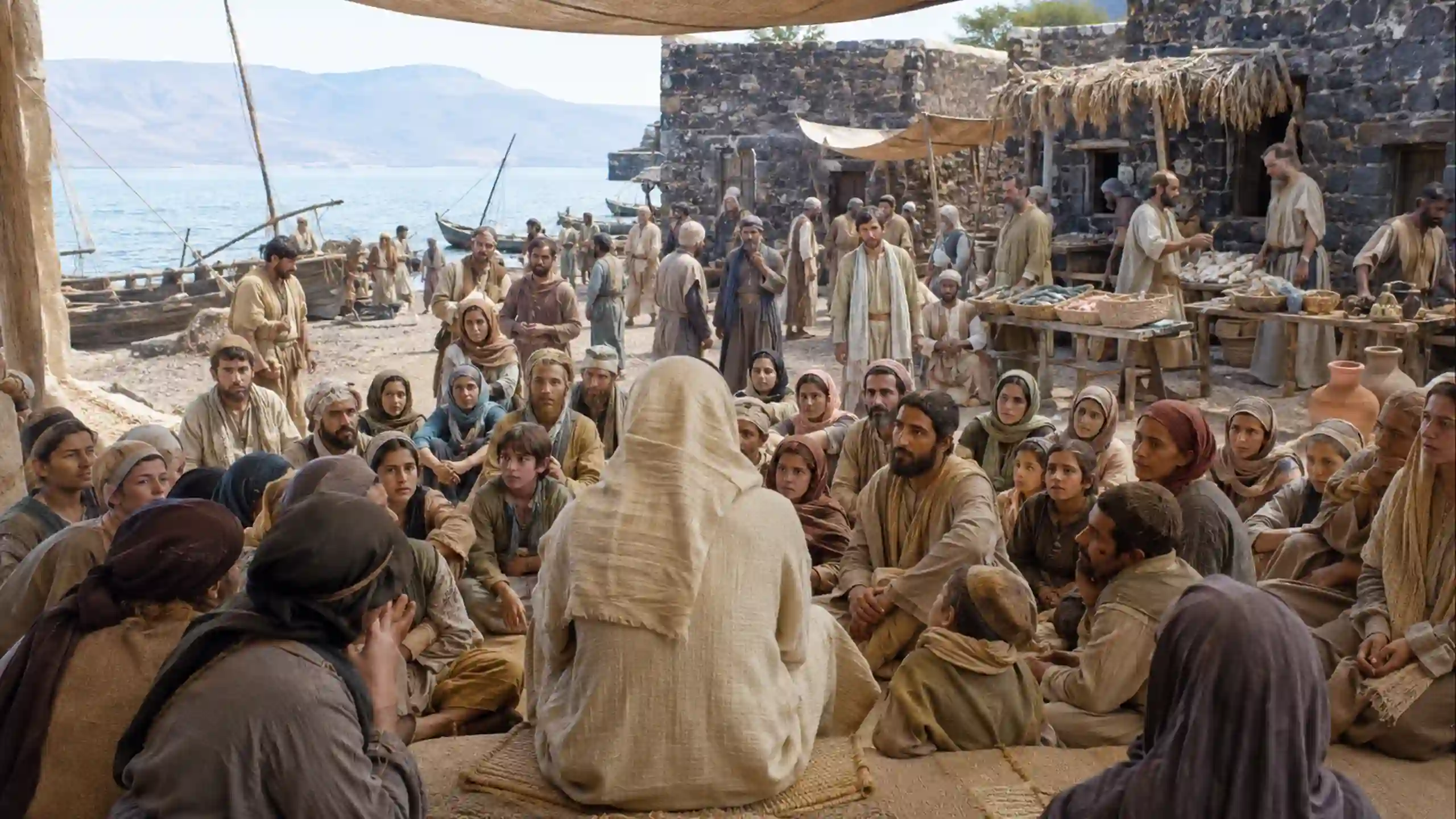
Prayer and fasting: why do we combine them?
Fasting is not meant to replace prayer. It is meant to accompany prayer with faith, humility, and obedience to the Lord Jesus Christ.
Alexander Barkóci does not treat prayer and fasting as a religious performance. He presents them as a humble struggle of faith, waiting on the Lord, and intercession for people.
In this article
Summary
Alexander Barkóci repeatedly says that great works of God begin with prayer and fasting. But he is not talking about a technique a person can use to force a result from God. Prayer and fasting should come from faith, pure motives, humility, and genuine care for people.
In his sermons, fasting is not just a way of afflicting the body. It goes together with fervent prayer, intercession, laying aside our own ideas, and waiting until the Lord shows the next step. At the center is not the hungry person, but the Lord Jesus Christ. He went before us, He stood firm in temptation, and He gives the victory.
"Everything begins with prayer and fasting."
Alexander Barkóci
Fasting without prayer is not the goal
A person can go without food and still not draw near to God. He can talk about fasting, count the days, and admire his own endurance, while his heart remains full of pride, anger, or his own plans.
That is why Alexander explains that it is not only about a person "afflicting his body with fasting." He speaks of fervent prayer, of wrestling, and of intercession for people. A person enters into prayer and fasting because he cares about the lost, about his family, about the community, and about the people the Lord has laid on his heart.
So fasting is not meant to put us at the center. It is meant to humble us before God. It is not meant to show how strong we are. It is meant to reveal whether we truly care about what the Lord Jesus cares about.
Biblical basis: Isaiah 58:3–9; Matthew 6:16–18; 1 Peter 2:5–9.

It all begins with the Lord Jesus
When Alexander speaks about prayer and fasting, he goes back to the Lord Jesus. The Lord Jesus lived in fellowship with the Father. Yet before beginning His public ministry, He went into the wilderness, where He fasted for forty days and faced temptation.
This does not mean that everyone should repeat the Lord Jesus' forty-day fast. Alexander himself explicitly warns against making such a decision on one's own. From the Lord Jesus' example he highlights something else: the work did not begin with human organization, advertising, or immediate activity. It began with surrender to the Father.
Anna in the temple also served God with fastings and prayers. Simeon waited for God's salvation. In the Acts of the Apostles, believers prayed and fasted before sending out workers and when appointing elders. In the Bible, prayer and fasting are not aimed at human glory. They are aimed at God's will.
That is why the Lord Jesus remains at the center. Fasting does not save anyone. It does not erase sin, and it does not replace the blood of Christ. Victory does not come from an empty stomach, but from the Lord Jesus, to whom a person surrenders in humility.
Biblical basis: Matthew 4:1–11; Luke 2:36–38; Acts 13:1–3; Acts 14:21–23.
Why Alexander adds fasting to prayer
In one sermon Alexander distinguishes between two situations. He recalls the Lord Jesus' call: "Watch and pray, that ye enter not into temptation." Prayer guards a person's heart so that he does not enter into temptation and fall.
Then he speaks about times when a person or a community runs into long-term spiritual resistance and nothing seems to move. It is here that he repeatedly says: "Add fasting to your prayer." In his teaching, prayer and fasting tear down the enemy's plans and prepare the spiritual ground for what God wants to do.
But this is not a manual for controlling the spiritual world by your own strength. Alexander always attributes the victory to the Lord Jesus. He says: it is not you, but the Lord Jesus Christ who destroys the works of the devil. A person prays and fasts, but he does not act as someone who has power in himself.
That is why fasting without Christ is meaningless. Prayer without obedience can turn into religious words. And spiritual wrestling without humility can lead a person into pride.
Biblical basis: Matthew 26:36–41; Mark 9:14–29; 1 John 3:8.
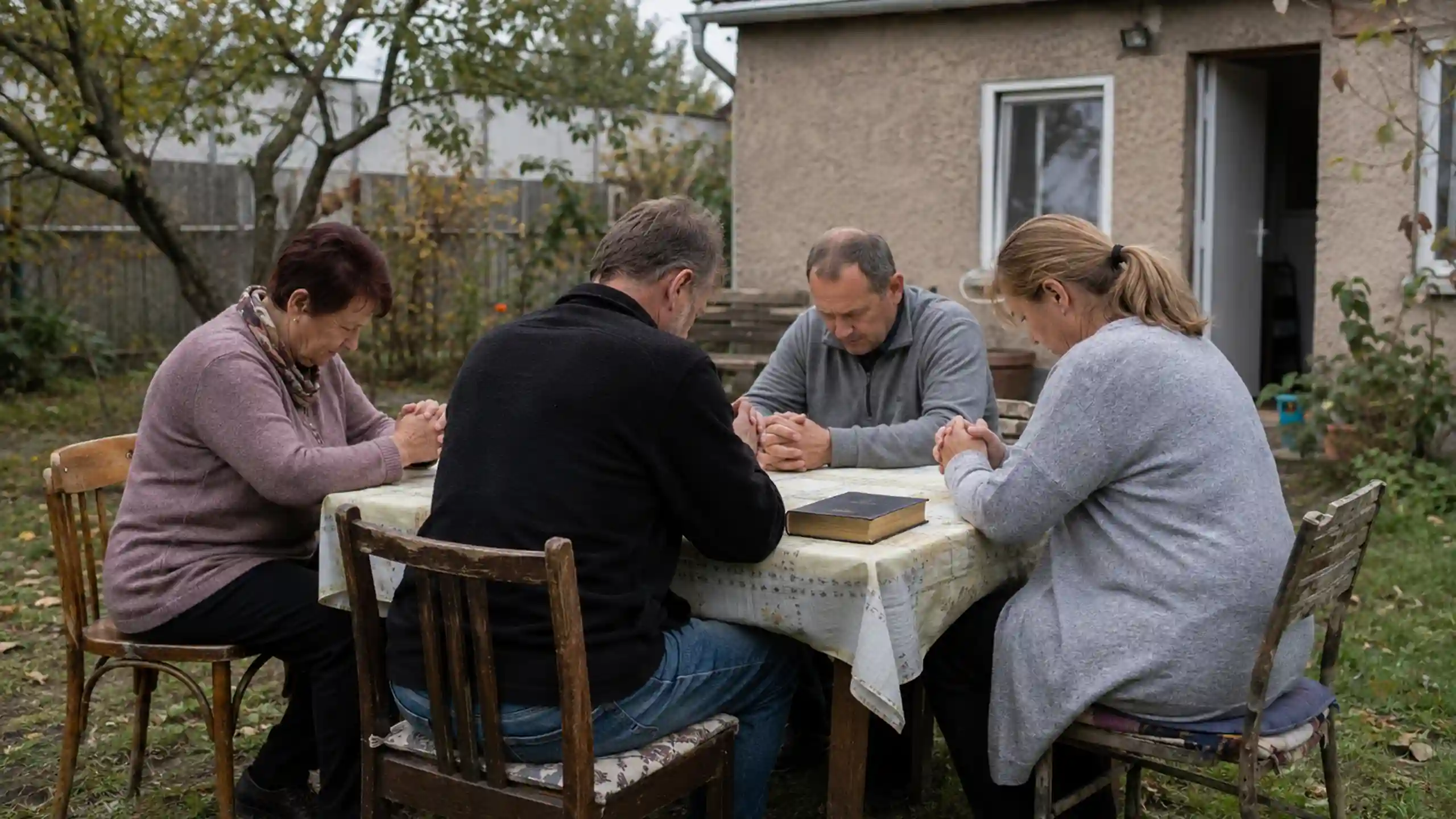
Pure motives, faith, and a humble heart
Alexander points out that you cannot enter a fast with impure motives. A person may long for recognition, power, money, or for his own idea to win out. Outwardly he fasts, but inwardly he wants God to serve his plan.
Such a fast misses the mark. Alexander connects prayer and fasting with faith. Not with showing off, and not with fear. At the same time, he speaks of pure intentions, sincerity, and a humble heart. God sees a person's heart, even when people do not.
So fasting must not cover up compromise. If a person knowingly holds on to sin, unforgiveness, or pride while trying to engage in spiritual warfare, he first needs to face the truth before the Lord. Prayer and fasting are not a substitute for repentance. They lead to it.
"You have to go into it with pure motives, pure intentions, and a humble heart."
Biblical basis: Psalm 51:10–17; Isaiah 58:3–7; James 4:6–10.
Prayer and fasting are intercession for people
One of Alexander's central thoughts is that fasting is not just a personal spiritual discipline. It is a struggle for people.
He speaks about the spiritual priesthood that intercedes. He asks whether a person cares about his siblings, his family, his city, and his nation. The love of Christ does not let us stand by calmly while people perish. It leads us to prayer, intercession, and service.
This is where true motivation shows. Do I fast so that I look spiritual? Or because the Lord has placed on my heart someone I weep and plead for? Do I want a result for the sake of my reputation? Or do I long for the Lord Jesus to be glorified and for a person to be saved?
Alexander describes how he and his wife first prayed and fasted together, and only then did the people God had prepared come. It was not about manipulating people. They waited on the Lord to open doors and show them the key people.
Biblical basis: Romans 9:1–3; Romans 10:1; 1 Timothy 2:1–6; 1 Peter 2:9.

Pray first, then get up and go
Prayer and fasting are not an excuse for never taking action. They are preparation for a step of obedience.
Alexander says that if the Lord sent him to a place with no church, he would not immediately start organizing a program. First he would pray and fast until the Lord told him: "Now get up and go."
This waiting is not passivity. In it a person lays aside his impatience and his own ideas. He learns to look to the Lord. Then, when God's instruction comes, he must get up and obey.
In the story about Csongor, Alexander admits that at first he did not want to stop for the hitchhiker. He had his own will and his own schedule. But prayer and fasting had taught him to be attentive to the Lord. When he lost his peace, he stopped. An ordinary encounter became the beginning of the story of a man who gave his life to the Lord Jesus and later became a co-worker in the ministry.
So fasting is not meant to close a person in on himself. It is meant to prepare him to recognize God's timing and do what the Lord shows him.
Biblical basis: Acts 9:6; Acts 13:2–4; James 1:22–25.
God may not answer the way we imagine
A person can pray for revival for a long time while having an exact picture of what it should look like. Then, when God begins to work differently, he may reject the answer to his own prayer.
Alexander speaks about this very openly. People prayed for years, but when new converts came and the ministry began to disrupt the established order, they said: "This is not what we had in mind."
That is why it is not enough to ask: "Lord, act." A person must be ready to lay down his own ideas and accept God's will. Prayer and fasting are not a way to force our ideas on heaven. They are the place where our ideas are submitted to the Lord Jesus.
God's answer may come through a person we would not have chosen. It may disrupt our comfort. It may bring responsibility for people who need time, love, and patience. If we ask for new things, we must be ready to serve when God begins to do them.
Biblical basis: Isaiah 55:8–9; Luke 22:42; Romans 12:1–2.
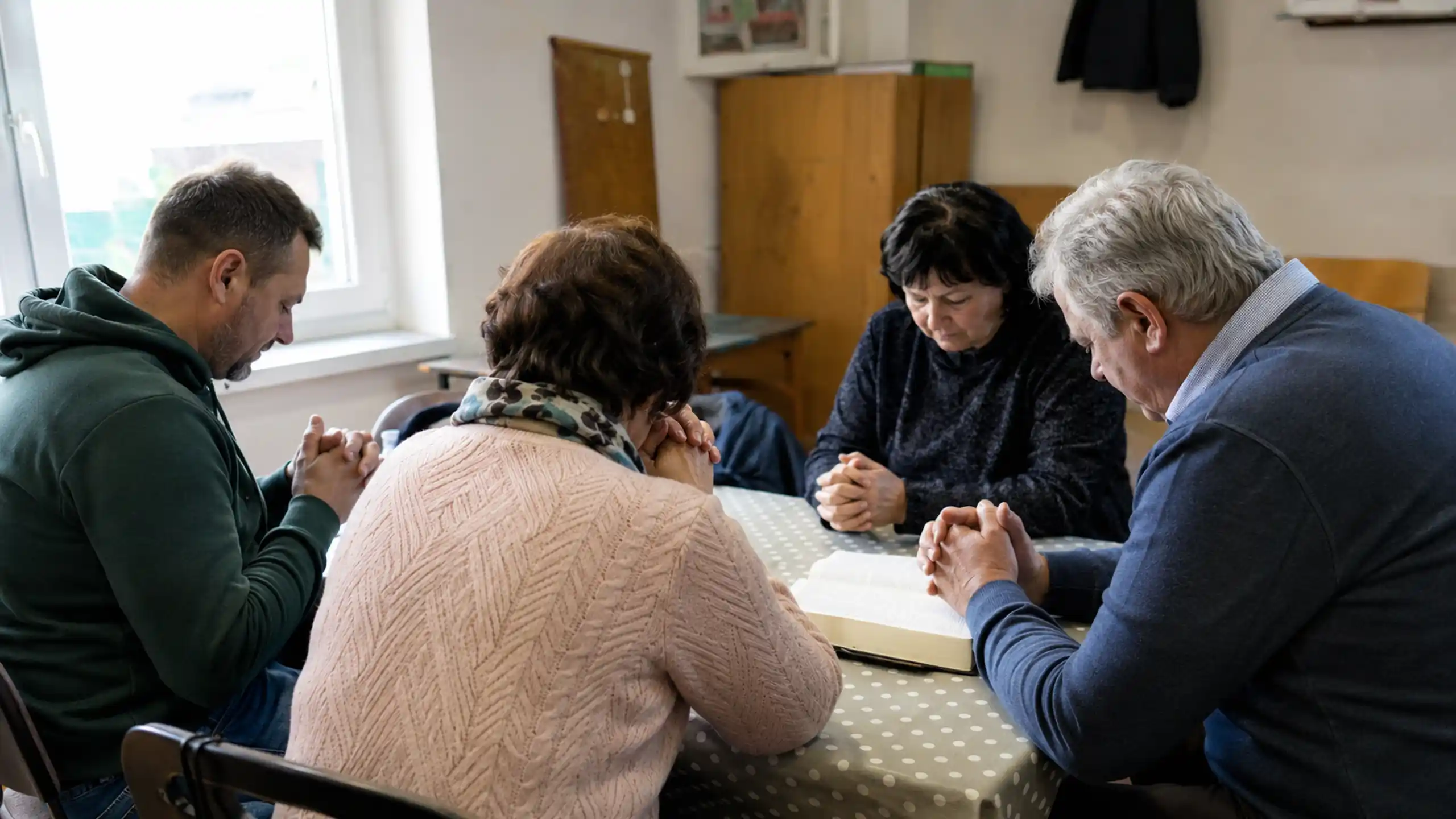
Fasting together and the forty-day limit
Alexander also describes a chain fast in the church community. People divide up the individual days, and each person prays and fasts on his own day. He emphasizes honesty, wholeheartedness, and a shared goal.
At the same time, he says explicitly, twice, that he does not recommend that an individual undertake a forty-day fast on his own. This sets an important limit: the Lord Jesus' fast cannot be turned, without discernment, into a universal regimen for everyone.
His sermons on this topic are not health guidance. That is why this article does not set the length of a fast, the amount of fluids, or a plan for people with health limitations. The core message is the spiritual reason: fasting should go together with prayer, faith, humility, pure motives, and obedience to the Lord Jesus.
Biblical basis: Joel 2:12–17; Acts 13:1–3.
Add fasting to prayer, but stay close to Christ
Prayer and fasting are not goals in themselves. The goal is not to go as long as possible without food or to win people's admiration. The goal is to draw closer to the Lord, lay down your own will, and be ready to do what He shows you.
If you pray only for your own comfort, the Lord may enlarge your heart to include other people. If you expect a quick result, He may teach you perseverance. If you want Him to confirm your plan, He may tell you to lay it down. If things have been at a standstill for a long time, He may call you to deeper prayer and fasting.
But in everything, stay close to the Lord Jesus. He is the victor. He is the Lord of the work. He prepares people, opens doors, and gives the increase. Your part is to pray, fast, listen, and when the Lord says "go," obey.
Short prayer
Lord Jesus Christ,
here I am before You. I do not want to push my own will or my own ideas. I want to do Your holy will.
If I have thought otherwise, change my thinking. If there is pride, impure motives, or a desire for recognition in me, bring me into humility and truth. Cleanse my heart and teach me to pray with faith and love.
Lay on my heart the people I should intercede for. Give me perseverance to wait for You and obedience to get up when You tell me to go.
Lord Jesus, be the Lord of my prayer, my fasting, my decisions, and all my ministry.
Amen.
Why does Alexander say everything begins with prayer and fasting?
In the sermon "Všetko začína modlitbou a pôstom" (Everything begins with prayer and fasting), Alexander Barkóci explains why he first waited on the Lord before beginning his ministry, how prayer and fasting prepare the spiritual ground, and why human activity alone cannot produce the result. Listen to the key part of the original teaching. The video is in Slovak – turn on subtitles in English.
Read in God's Word
Isaiah 58:3–12 – the fast that pleases God shows itself in truth, mercy, and making things right.
Joel 2:12–17 – returning to God with all your heart, with fasting and repentance.
Matthew 4:1–11 – the Lord Jesus in the wilderness, fasting, and victory over temptation.
Matthew 6:5–18 – prayer and fasting without showing off before people.
Luke 2:36–38 – Anna serves God with fastings and prayers.
Acts 13:1–4 – prayer, fasting, and sending out into ministry.
Acts 14:21–23 – prayer and fasting when appointing elders.
Related teachings by Alexander Barkóci (the videos are in Slovak – turn on subtitles in English)
2050. Všetko začína modlitbou a pôstom (Everything begins with prayer and fasting) – 1:09:40–1:21:59; 2:05:31–2:15:14: prayer and fasting before ministry, key people, a chain fast, and an explicit caution against an individual 40-day fast.
2119. Zaži niečo nové – 1. časť (Experience something new – part 1) – 41:19–49:40: prayer and fasting in connection with revival, faith, and readiness to accept God's answer even when it differs from what one had imagined.
2146. Návrat ku Kristovi – 2. časť (Return to Christ – part 2) – 31:44–40:32: the Lord Jesus' fast, spiritual warfare, rejecting compromise, and waiting until the Lord says "get up and go."
2196. Naše vlastné predstavy sú prekážkou Božieho kráľovstva (Our own ideas are an obstacle to the kingdom of God) – 39:47–54:06; 1:16:56–1:20:16: praying together, fasting, humility, character, and surrendering our own ideas.
2190. Zakladanie zboru (Planting a church) – 22:10–38:26: a time of preparation, prayer, and fasting, the story of meeting Csongor, and sensitivity to the leading of the Holy Spirit.
1893. Nedeľa s hosťom (Sunday with a guest) – 56:31–1:03:14: prayer, fasting, spiritual struggle, pure motives, and a humble heart.
1845. Božia láska nás volá k zmene – 2. časť (God's love calls us to change – part 2) – 1:23:23–1:28:40: fasting as the fervent intercession of the spiritual priesthood and a struggle for people.
2049. Vyznanie v komôrke aj na verejnosti (Confession in the prayer closet and in public) – 43:43–49:22: fasting, bringing the desires of the flesh under control, and the reign of the Lord Jesus over one's life.
1966. Kázanie ráno (Morning sermon) – 1:41:14–1:48:54: long prayers and fasts, human ideas, and accepting the way God works.
1938. Kázanie (Sermon) – 2:10:31–2:11:25: a brief call to nourish your spiritual life with God's Word, prayer, and fasting.