How to read the Bible and understand what you read
Read the Gospels, give thanks for the word you understand, and receive it into your life.

How do you begin reading the Bible and receiving what you understand? Alexander Barkóci encourages reading the Gospels and compares God's Word to food that helps us grow. He connects reading with gratitude, prayer, and living by the words of the Lord Jesus.
In this article
How to read the Bible and understand what I read
Pick up God's Word and read the Gospels. Read what the Lord Jesus says. When you understand something, thank Him for it and take it into your life. This is how Alexander Barkóci explains how to read the Bible: we receive God's Word as food that helps us grow.
Editor's note: This text is adapted, with light editing, from selected passages of sermons by Alexander Barkóci. The teachings used and their time ranges are listed below the article. Photos are for illustration only.
How to start reading the Bible: read the Gospels
When you want to come to the Lord Jesus and learn from Him, pick up Scripture. Read the Gospels, and read His counsel. That is where you will receive light. That is where you will find rebuke, warning, challenge, and promises.
Alexander encourages his listeners to read especially the New Testament. It speaks about the Lord Jesus Christ, His birth, His life, and His teaching. If you want to get to know the Lord Jesus Christ, read what He says and how He acts.
The Lord Jesus calls us to learn from Him. When you are making a decision or need advice, you can come to Him. And what does it mean to come to Him? It also means that you pick up God's Word and read His words. You can encounter God in His Word.
God's Word contains counsel for our lives. When we read it, we can know what the Lord Jesus is saying to us and where He is leading us. He teaches us. We need to learn from Him.
Do you have your own question about reading the Bible?
The Bible Guide searches Alexander Barkóci's public sermons and teachings and shows you where he speaks about this topic – with Bible verses and the exact time in the video.
God's Word is the manual for our lives
Alexander also explains this through a mistake of his own. He bought a computer and wanted to turn it on. He thought that surely he knew how to turn on a computer. He did not read the manual. When he plugged it in, smoke came out of it, and the computer was damaged.
He does not blame the manufacturer. The mistake was his, because he did not read the manual. He brings up this story when he talks about God's Word: we also need to know the manual for our lives.
That manual is Holy Scripture. It contains the counsel of the Lord Jesus. When we read His commandments, we are reading the words of the One we should love and follow. In the Gospel of John, the Lord Jesus links love for Him with keeping His words.
That is why reading should carry on into our lives. The Lord Jesus speaks, and a person receives His word. That person learns to act on it. The article "Why is God's Word the only certainty in life?" also returns to the question of what a person can rely on.

When you read God's Word, whom do you see in it?
How do you approach God's Word? Do you read it and immediately think of someone else who could use those words? This is for that brother, this is for that sister? Alexander turns the question back on the person who is reading: whom do you see in that word?
He uses the image of water in the palm of your hand. When you look into it like a mirror, you see your own face. In the same way, God's Word should tell the truth about you. You are responsible for yourself. You are responsible for your character.
If you pass every rebuke on to someone else, you will always be reading for others. But you need to see your own face. You need to hear what the Lord Jesus is saying to you. How you approach Scripture is also connected to your willingness to accept the truth about yourself.
That is why you need to read the Bible: so that you have light for yourself. So that you know how to act, how to decide, and which way to go. Alexander reminds us that he, too, needs the Lord's light so that he will not fall into a pit, walk into a snare, or do something that would grieve the Lord. Each of us needs this light for our own life.
You also need to “swallow” the word you read
In First Peter we read about desiring spiritual milk. Peter mentions newborn babies, who need food in order to grow. In the same way, we too should long for God's Word.
Alexander keeps this image very concrete. A baby drinks milk, and it also has to swallow it. He explains receiving God's Word in a similar way. When you read something and understand it, thank the Lord Jesus. Thank Him for what you have understood and what you can take into your life.
In the teaching, he expresses this gratitude in simple words. Lightly edited:
Thank You, Lord Jesus, that I was able to understand this. Thank You that I can apply it in my life.
This is what he calls swallowing. You receive for yourself the word you have understood and thank Him for it. It becomes your own. Then you grow by this word.
That is why Alexander urges his listeners to love, read, and receive God's Word. He also addresses this call to people who are just beginning their life with the Lord Jesus. Just as a newborn baby needs milk, they need God's Word in order to grow by it.
He himself says that this is how he has grown since the age of fifteen, when he gave his life to the Lord Jesus Christ. His faith grew, and his relationship with the Lord Jesus grew. He connects receiving God's Word with this personal growth.
So reading leads both to gratitude and to action. The article "Why is it not enough just to hear God's Word? We need to obey the Lord Jesus" builds on this connection.

Can sermons replace personal Bible reading?
Alexander says it plainly: no sermon, no video, and no programs can replace the personal fellowship you can have with the Lord Jesus through reading God's Word and prayer.
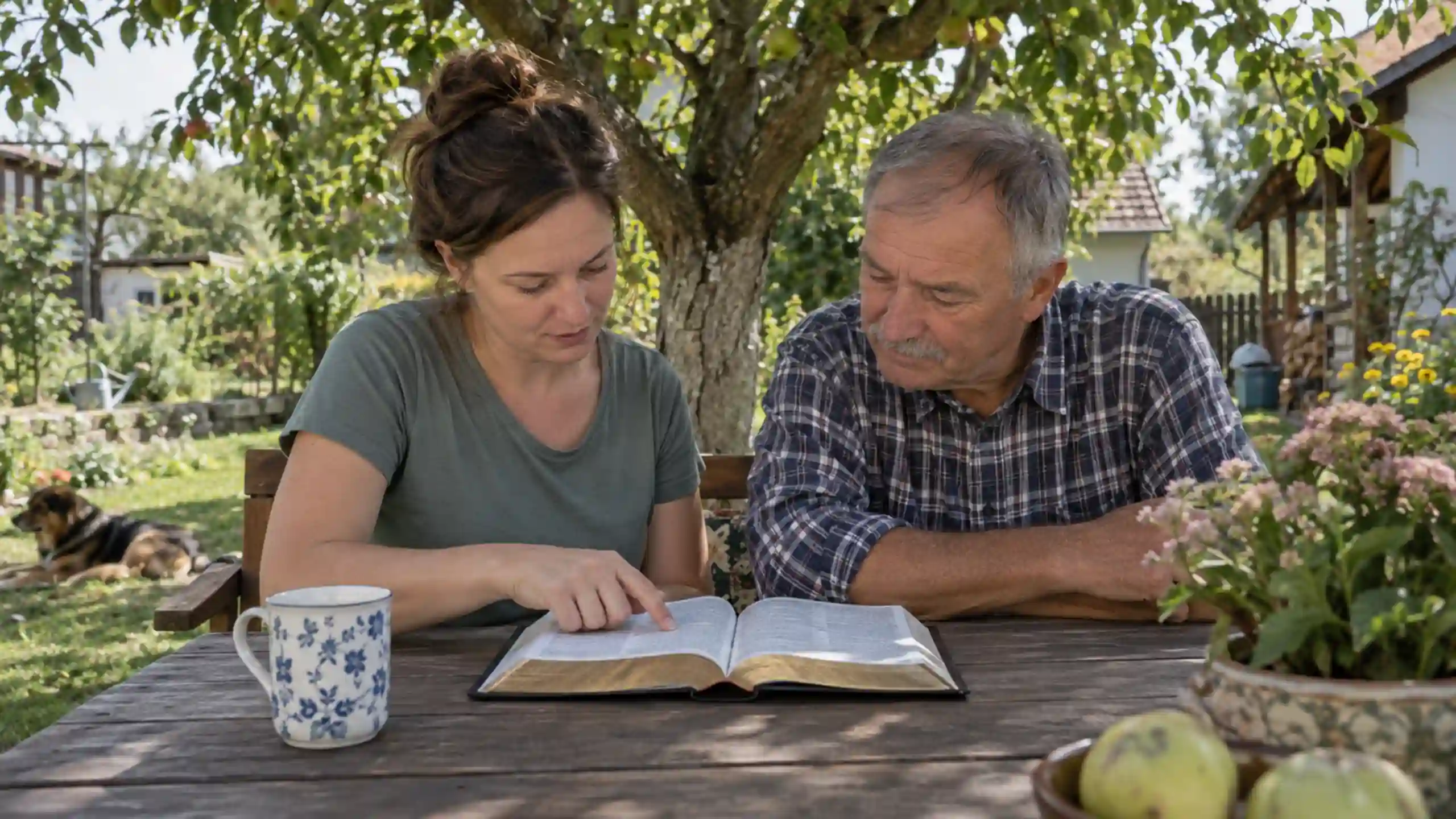
As you read, you receive His word. In prayer you thank Him for what you have understood. You come to Him with what you have read, and you receive it into your life. This personal fellowship is exactly what Alexander is talking about when he explains why a person should not settle for just listening to sermons.
Even if you listen to a teaching, you still need to read God's Word yourself. Even when someone explains Scripture to you, you need to receive before the Lord what you have understood. In this encouragement, reading and prayer go hand in hand.
The opening prayer of one of the teachings used here expresses this willingness by asking for ears that hear and a heart willing to do God's will. For your own prayer, you can also use the prayer to the Holy Spirit for guidance into the truth.
What should I do with questions that come up while reading?
Alexander also connects reading God's Word with prayer and the fellowship of believers. He encourages believers to help one another and grow spiritually. When a husband and wife want to belong to the Lord Jesus, they should share with each other and help each other.
He expects that they will have questions. He encourages them to bring them before the Lord, even on their knees. Read God's Word, pray, and have fellowship with one another. That is his call to people who want to grow in the knowledge of the Lord Jesus.
Here, too, he reminds us that this is a free decision. A person should enter into a relationship with the Lord Jesus willingly, out of love. Being willing to listen to His word and act on it is also part of this relationship.
So pick up God's Word. Read the counsel of the Lord Jesus. When you understand it, thank Him. Receive it for your life. That is how you can grow by God's Word.

Closing prayer
Shortened and lightly edited from the opening prayer in the teaching "Charakter Božieho bojovníka" (The character of God's warrior).
Lord Jesus,
with all our hearts we thank You for this new opportunity You have given us.
We thank You for the word through which You speak to us personally and specifically.
We humbly ask You to give us ears that hear and hearts willing to do Your will.
Amen.
Bible verses
1 Peter 2:1–3 — lay aside malice, deceit, hypocrisy, envy, and slander; desire the milk of the word and grow by it.
John 14:21 — "He that hath my commandments, and keepeth them, he it is that loveth me."
Psalm 119:105 — "Thy word is a lamp unto my feet, and a light unto my path."
Bible verses are quoted from the King James Version.

Sermons by Alexander Barkóci used in this article
1938. Kázanie (Sermon) – Alexander Barkóci: 13:10–20:29 — God's Word as a manual, reading the New Testament, and keeping the words of the Lord Jesus; 1:45:37–1:51:27 — spiritual milk, giving thanks, growth, and personal fellowship; 2:06:11–2:11:27 — reading, prayer, questions, and helping one another.
1996. Charakter Božieho bojovníka (The character of God's warrior) – Alexander Barkóci: from 10:50 — opening prayer; 1:01:27–1:07:25 — seeing your own face as you read; 1:11:00–1:15:40 — light for your own life and decisions.
2204. Pán čaká na tvoj návrat (The Lord is waiting for your return) – Alexander Barkóci, Pustá Rybná–Telecí, May 23, 2026: 48:28–55:14 — the computer story, reading the Gospels and the counsel of the Lord Jesus; 1:18:37–1:21:55 — encountering God in His Word.
The time ranges are based on transcripts and mark the wider context of each thought. The videos are in Slovak – turn on subtitles in English.
Listen to an encouragement to read the Bible yourself
Alexander compares receiving God's Word to eating food: read, understand, give thanks, and take it into your life. The video is in Slovak – turn on subtitles in English.